



|
 |

Communications industry: Copyright laws will ruin Internet
December 6, 1996
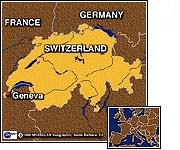
Web posted at 5:00 p.m. ESTGENEVA (CNN) -- New copyright proposals aimed at cracking down on cyberspace piracy will choke the Internet, clog public access to information and virtually destroy everything that has made cyberspace an information highway.
At least that's what communications giants argued Thursday as they lobbied against what they called far-reaching accords that would impact everything from on-line sports scores to the latest Wall Street ticker.
The warnings came as world diplomats continued talks in Geneva, under U.N. auspices, where they are to decide on global treaties to revise Internet copyright laws.
The group of telecommunications companies, including AT&T, MCI, Netscape, America Online and CompuServe, said all three proposed treaties have features that are ill-advised, and that the people who are to decide on the law know nothing about cyberspace.
"Not only do these people not understand the technology, but they actually have no experience of Internet at all," said Barbara Dooley, head of Commercial Internet Exchange Association. "The ideas they're working with are not 21st century yet."
Proposals to stop Internet piracy
During the three-week conference, which began Monday, hundreds of officials and copyright experts from more than 120 countries are to discuss three treaties on literary and artistic works, the rights of performers and producers of music and producers of databases.
The proposed changes are billed as necessary in stopping the distribution of illegal material, such as the latest pop music or computer software, over the Internet.
But opponents say the treaties go much further.
"The draft treaty creates very broad rights. Its unintended consequences could be potentially catastrophic," said Peter Harter of Netscape.
For instance, the treaties would presume a copyright violation for the temporary holding of a document in a computer's or server's hard disk cache. Without such information, critics say the Internet would be rendered useless.
James Love, director of Ralph Nader's Consumer Project on Technology, said the treaties would even curb the way on-line news organizations can report sports statistics.
In more than 100 years of copyright protection of expression and creativity, facts have been regarded as free to all. But the new treaties would give professional leagues ownership of sports statistics and stock markets ownership of stock tables. News media that want to reproduce the numbers would have to get a license from the owners, Love said.
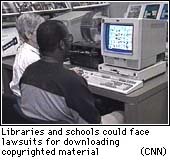
Critics also contend the treaties will hold schools and libraries liable for those people who download copyrighted material off the institutions' machines.
The Associated Press and Reuters contributed to this report.
Related site:
Note: Page will open in a new browser windowExternal sites are not endorsed by CNN Interactive.
Watch these shows on CNN for more sci-tech stories:
CNN Computer Connection | Future Watch | Science & Technology Week

Tell us what you think!
You said it...

© 1996 Cable News Network, Inc.
All Rights Reserved.